


By Scott Sanders, Delivery Executive - Managed Services
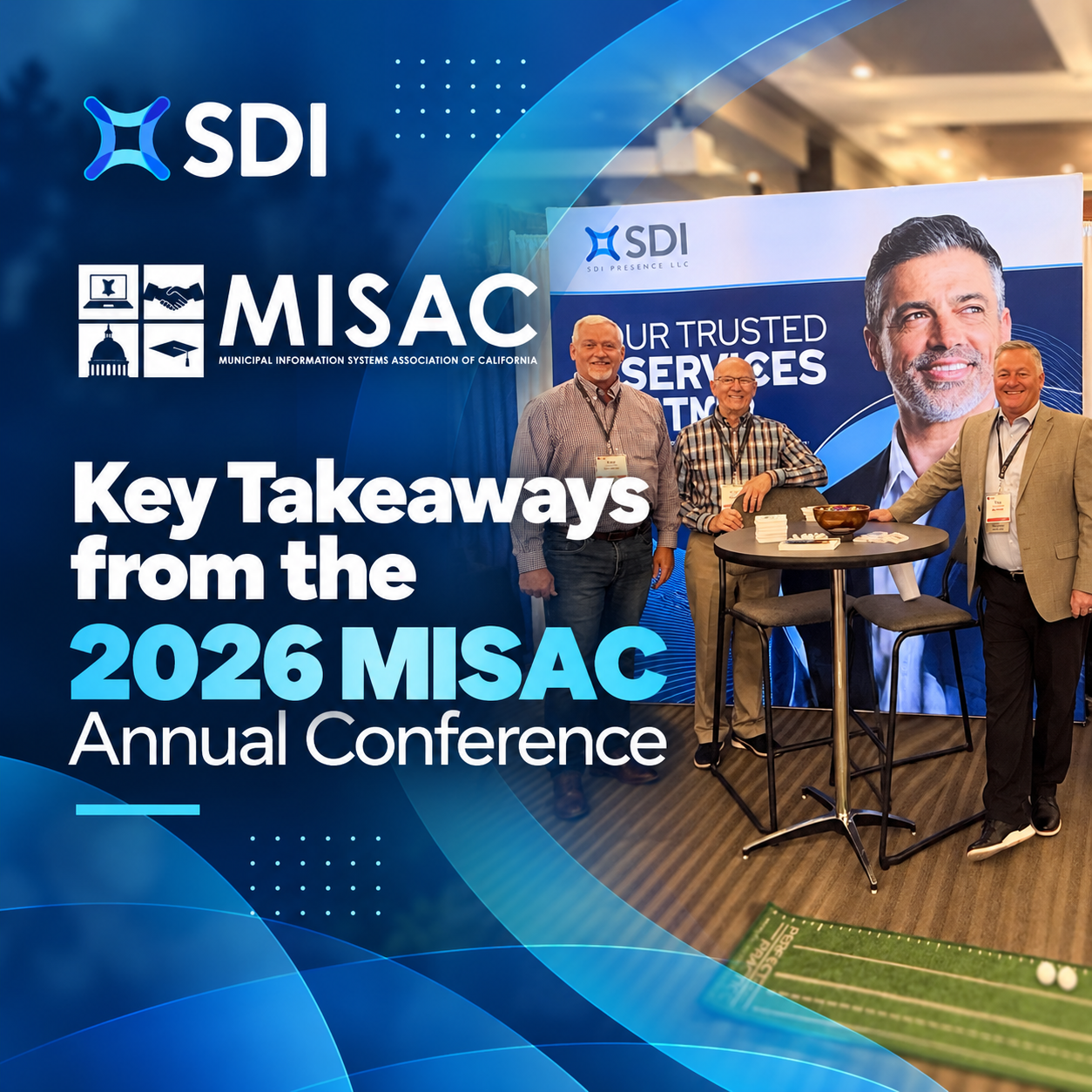
The 2026 MISAC Annual Conference brought municipal IT leaders together to discuss the challenges and opportunities shaping the future of local government technology. From responsible AI adoption and cybersecurity resilience to practical modernization strategies, this year’s conversations highlighted the need to balance immediate operational demands with long-term technology priorities. Drawing on key themes from the conference agenda and conversations at the SDI Presence booth, here are some key takeaways for local government IT leaders.
AI Is Becoming an Operating Model — Not an Experiment
The conversation is moving from “Should we use AI?” to “How do we deploy it responsibly and make it stick?”
Across the agenda, AI is framed less as a standalone technology and more as an organizational capability. Municipal IT leaders are being asked to build governance, workforce readiness, security controls, practical use cases, and implementation roadmaps alongside the tools themselves. The emerging message? Successful AI adoption will depend as much on operating discipline and culture as it does on the technology.
Resilience Is Becoming the New Cybersecurity Benchmark
Prevention still matters. But readiness, recoverability, and continuity are increasingly part of the definition of security.
The cybersecurity track repeatedly looks beyond perimeter defense to what happens when an incident occurs. Sessions emphasize insider threats, ransomware and cyber recovery, incident response, business continuity, AI-enabled threats, and the ability to restore essential municipal services safely. The posture is shifting from trying to eliminate every possible breach to building the operational resilience to withstand and recover from disruption.
Practical Modernization Is Winning Over Perfect Modernization
Municipal IT teams are finding ways to move forward despite legacy systems, platform constraints, lean staffing, and budget realities.
A recurring theme in the program is modernization under real-world constraints. Agencies are designing architectures around current government-cloud limitations, modernizing with lean teams, breaking down organizational silos, and extracting more value from the systems and data they already have. The takeaway is not to wait for perfect conditions, but to deliver value now while building deliberately toward the longer-term technology vision.
What Municipal IT Leaders Tell Us Directly
Conversations at the SDI Presence booth reinforced a familiar challenge for local government IT leaders: doing more with limited resources while preparing for what's next.
With budgets expected to remain tight, organizations are taking a more strategic approach to technology investments, prioritizing solutions that extend the value of existing systems, strengthen operational resilience, and deliver measurable results.
Cybersecurity also remains top of mind, particularly as emerging technologies introduce new considerations. The advancement of quantum computing, for example, is raising important questions about long-term data protection, encryption standards, and how organizations should begin preparing for a post-quantum security landscape.
The core takeaway from our booth? Local governments must balance immediate operational and budget priorities with the longer-term investments needed to protect their systems, data, and communities.
Looking Ahead
As local governments navigate evolving technology, tighter budgets, and growing security demands, a clear strategy is essential to making progress and delivering lasting value.
The conversations at MISAC reinforced the importance of aligning technology investments with organizational priorities, building resilience, and preparing for what’s next without losing sight of today’s needs. SDI Presence partners with local governments to develop practical IT strategies, strengthen cybersecurity and data governance, and make the most of existing technology investments.
Contact SDI to discuss how your organization can turn its technology priorities into actionable plans.

.webp)