


By LaDarius Jackson, VP of ServiceNow Delivery
For years, organizations have invested in automation to eliminate repetitive tasks, streamline workflows, and improve operational efficiency. From routing service requests to accelerating approvals and incident resolution, automation has transformed how businesses operate.
But a new evolution is underway.
The conversation is shifting from automation to autonomy.
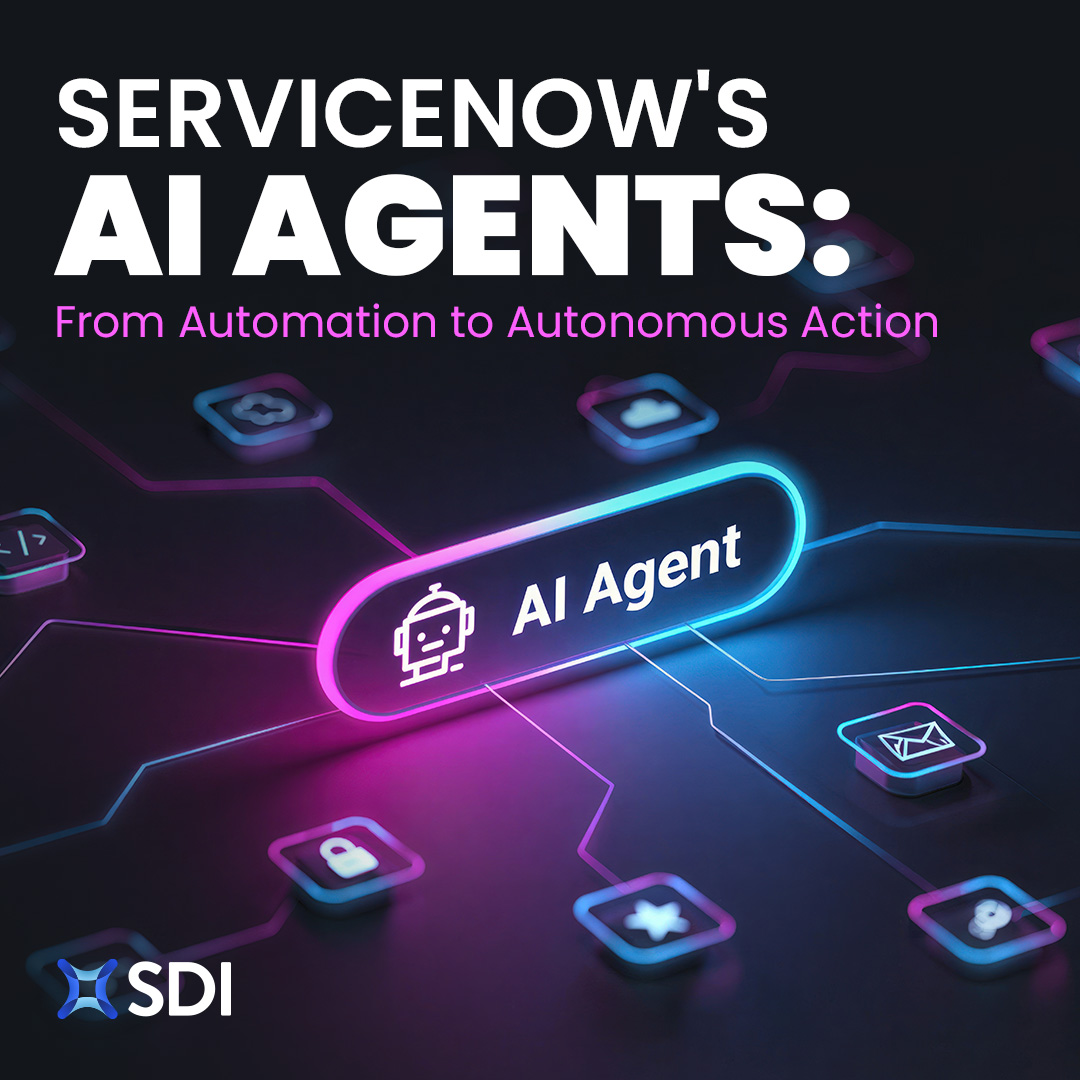
Powered by advances in Artificial Intelligence (AI), ServiceNow's AI Agents are moving beyond executing predefined rules and workflows. They can understand context, reason through complex tasks, make recommendations, and act with minimal human intervention. This marks a significant shift in enterprise operations, where digital workers can proactively support employees, customers, and business processes in entirely new ways.
Traditional automation is effective, but it is fundamentally reactive. It depends on rules that humans create and maintain. AI Agents operate differently. By leveraging generative AI and contextual data, they can interpret natural language, analyze information across systems, determine the next best action, and continuously learn from interactions and outcomes.
The result is a transition from task execution to intelligent decision support and autonomous operations.
The potential applications span the entire enterprise. In IT, AI Agents can diagnose incidents, recommend remediation steps, and resolve common issues more quickly. In customer service, they can understand intent, gather relevant information, and deliver more personalized support experiences. For employee workflows, AI Agents can guide onboarding, answer questions, and coordinate requests across departments.
However, autonomous action requires more than advanced technology—it requires a strong foundation.
But AI is only as effective as the data, processes, and governance that support it. Organizations need clean, accessible data, integrated systems, and well-defined workflows to ensure AI Agents can operate responsibly and effectively. Without these foundational elements, autonomous systems risk producing inconsistent recommendations or incomplete actions.
Responsible AI adoption requires clear accountability, oversight, and defined guardrails. Successful organizations are establishing governance frameworks that define when approvals are required, monitor AI-generated actions, and address security, privacy, and compliance considerations. The future of enterprise AI is not about replacing people. It is about augmenting human capabilities and enabling employees to focus on higher-value, strategic work.
ServiceNow's AI Agents represent the next evolution of digital transformation, moving organizations beyond task automation and toward intelligent, proactive orchestration across the enterprise. The question is no longer whether AI will become embedded in enterprise workflows—it is whether organizations are prepared to move from automation to autonomy.
As AI Agents continue to evolve, organizations that prioritize readiness today will be best positioned to lead tomorrow's autonomous enterprise. Ready to move from automation to autonomy? Contact SDI to learn how our ServiceNow and Data & AI experts can help your organization build an AI-ready foundation and implement intelligent workflows that drive measurable business outcomes.




.avif)