

By Ed Kipp, CIO
One of the best ways to recognize the people who keep your technology running is to give them more time to move your organization forward. System Administrator Appreciation Day, celebrated this year on July 31, recognizes the IT professionals working behind the scenes to keep systems available, secure and performing as expected.
They deserve the recognition. But as organizations look ahead to 2027, there may be an even more meaningful way to support the people keeping IT running: take a closer look at what you’re asking them to spend their time on.
Today’s IT teams are being asked to do more than maintain technology. They’re expected to strengthen cybersecurity, modernize aging environments, improve the employee experience, automate processes, prepare data for AI and help their organizations take advantage of rapidly evolving technologies. At the same time, the day-to-day work of IT hasn’t disappeared. Tickets still need to be resolved. Infrastructure needs to be monitored. Systems need to be patched. End users need support. Incidents happen. Environments need to be maintained. All of that work matters. But does all of it need to be done by your internal IT team?
IT’s Most Limited Resource May Be Attention
When highly skilled IT professionals spend the majority of their time keeping existing technology running, the real cost isn’t simply labor.
It’s opportunity. The cloud roadmap waits. The automation backlog grows. Technical debt compounds. The AI initiative stays in pilot mode. Modernization projects compete with the ticket queue.
And the people with the greatest knowledge of your organization spend less time applying that knowledge to the work that can move it forward. That’s why organizations evaluating their IT operating models should consider more than headcount. They should look at where their IT capacity is going.
Run. Improve. Transform.
One way to think about IT capacity is to divide the work into three categories:
RUN: Keep the environment operating. Service desk and end-user support. Infrastructure monitoring. Patching and maintenance. Routine administration. Incident management. After-hours coverage. This work is essential. Without it, the business stops.
IMPROVE: Make the environment work better. Automation. Platform optimization. Security hardening. Performance improvements. Process improvement. Reducing technical debt. This is where IT begins creating greater efficiency, resilience and value from the technology already in place.
TRANSFORM: Move the organization forward. AI adoption. Data modernization. Cloud transformation. New digital services. Emerging technology. Strategic modernization initiatives. This is increasingly where organizations need their most experienced IT talent focused. The challenge is that RUN never stops. And when internal teams are stretched thin, RUN has a way of consuming the capacity intended for IMPROVE and TRANSFORM.
Managed Services Can Be a Capacity Strategy
This is where the managed services conversation is changing. Managed services shouldn’t simply be viewed as a way to outsource IT work. For many organizations, it can be a strategy for determining where internal talent creates the greatest value—and building an operating model around it.
The question becomes less: “What IT work can we outsource?” And more: “What work truly requires the knowledge, judgment and organizational context of our internal team?”
A managed or co-managed services model can take ownership of defined operational responsibilities while allowing internal teams to remain focused on the initiatives where their institutional knowledge and strategic expertise matter most.
That might mean extending service desk coverage. Providing 24/7 infrastructure monitoring. Managing endpoints. Supporting cloud or network operations. Filling specialized skill gaps. Or taking responsibility for an operational function against clearly defined service levels.
The objective isn’t necessarily to replace the internal IT organization. It’s to give it more capacity.
A Different Conversation for 2027 Planning
As organizations begin planning priorities and budgets for the year ahead, IT leaders have an opportunity to look beyond the traditional question of whether they need more people.
Instead, consider asking:
- Where are our most skilled IT people spending their time today?
- What operational responsibilities consistently pull them away from strategic priorities?
- Where do staffing gaps, specialized skill requirements or coverage needs create risk?
- Which responsibilities genuinely require internal ownership?
- What could a managed services partner take on to create capacity for higher-value work?
The answers may reveal that the biggest constraint isn’t another technology investment. It may be the capacity to make progress on the investments you’ve already made.
Give IT More Room to Move Forward
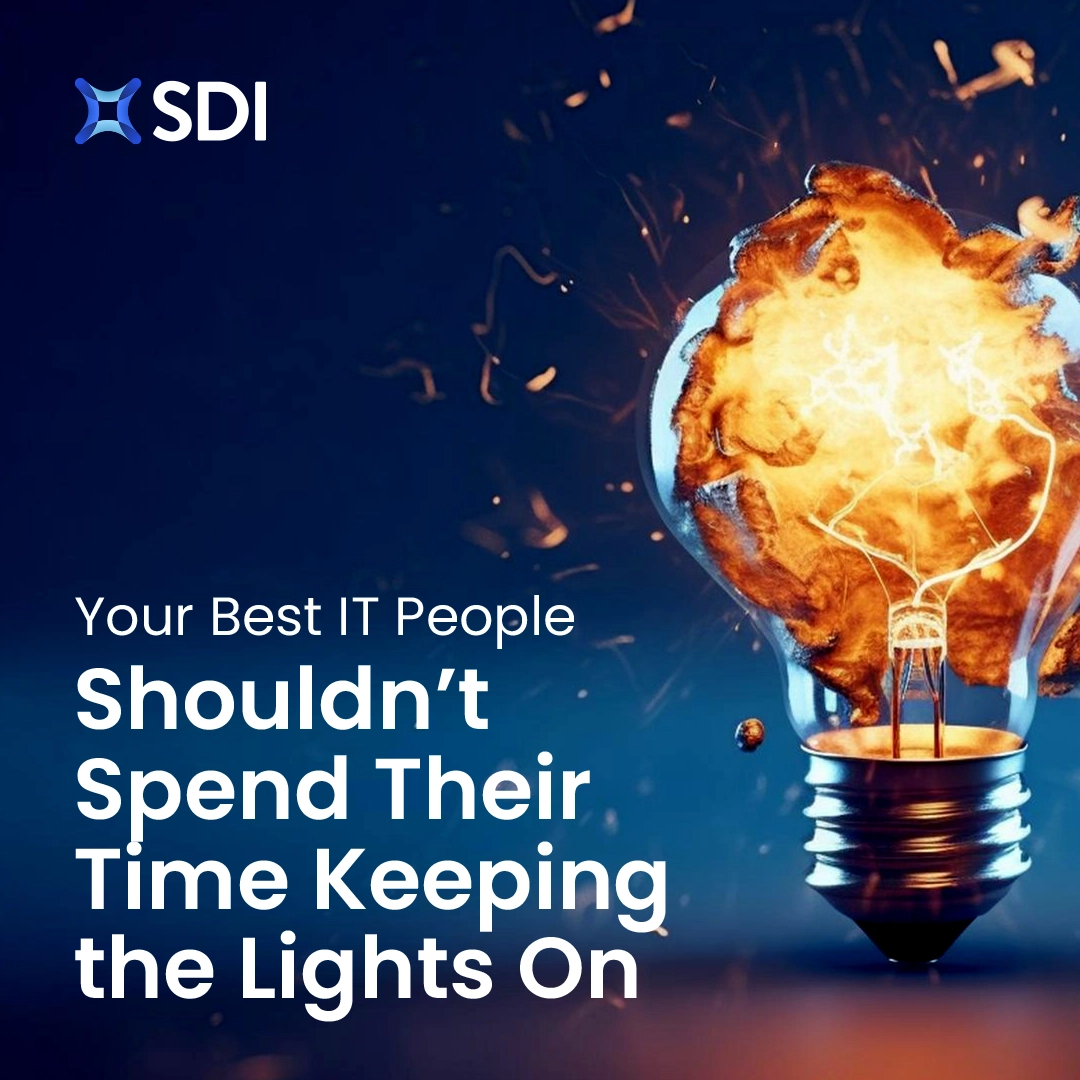
The people who keep technology running deserve recognition. They also deserve the opportunity to use their skills to solve bigger problems. As IT organizations take on AI, cybersecurity, data, modernization and an ever-growing list of business priorities, protecting the capacity of your best people matters. Because keeping the lights on is essential. But it shouldn’t keep your best IT people from helping determine what comes next.
What could your IT team accomplish with more capacity? SDI Presence helps organizations design managed and co-managed IT services that support day-to-day operations while creating room for internal teams to focus on strategic priorities. Let’s talk about what’s consuming your IT capacity—and what you could do differently.


.avif)