

By LaDarius Jackson, Vice President of ServiceNow Delivery
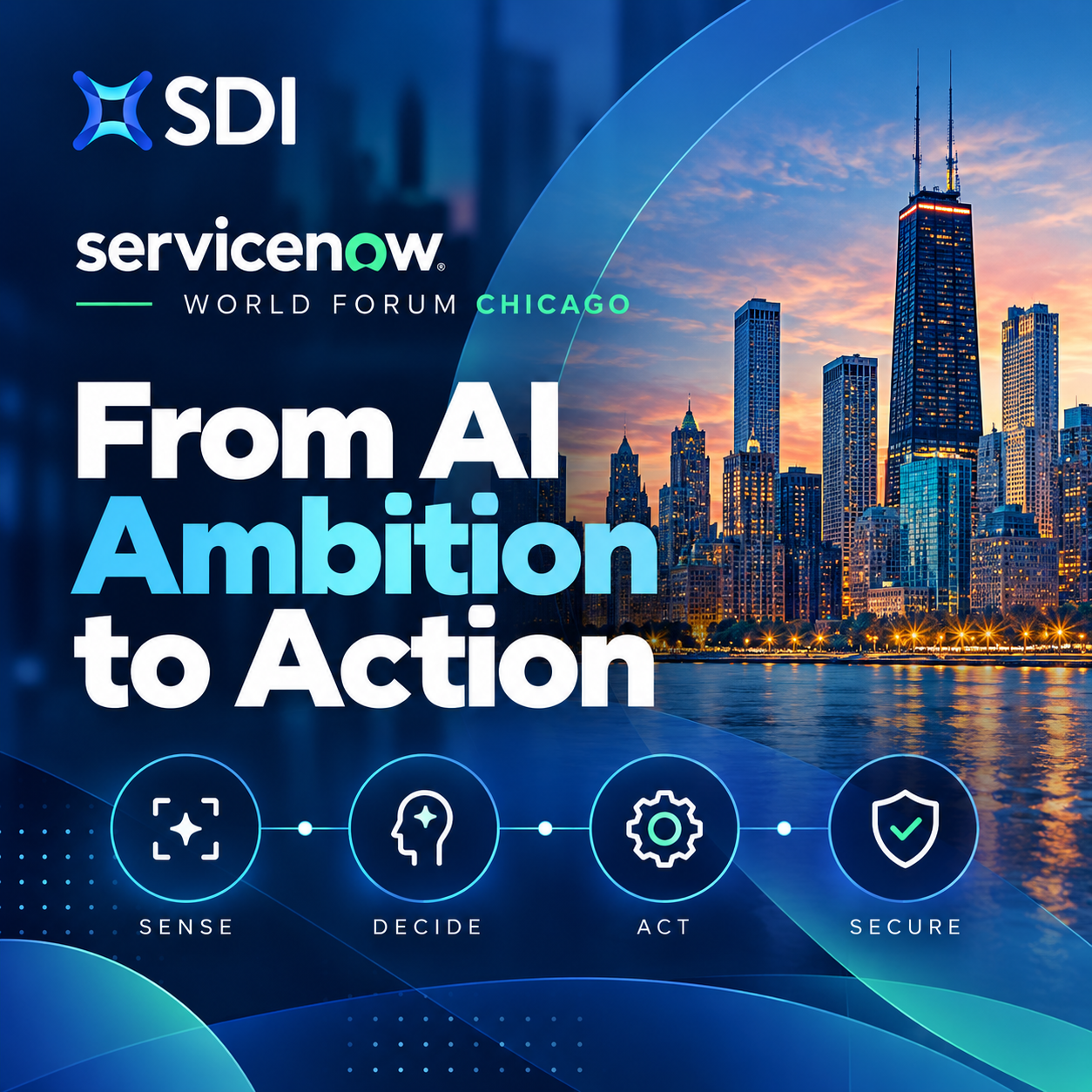
ServiceNow World Forum Chicago delivered a clear message, that the next chapter of enterprise AI is about completing work across the business.
The keynote session connected that ambition to a practical foundation ofreliable data, business context, workflows, and security. Through demonstrations and customer examples, ServiceNow showed how these elements can help organizations move toward more autonomous operations while maintaining oversight.
For organizations looking to put these ideas into practice, the key is understanding how to translate ServiceNow’s AI vision into operational improvements. The following takeaways explore how businesses can build on their existing investments, strengthen their foundations, and take practical steps toward AI adoption.
A Blueprint for Enterprise AI
The keynote organized ServiceNow’s approach around four actions: sense, decide, act, and secure.
AI must be able to recognize what is happening, understand its business significance, execute the appropriate workflow, and operate within defined controls.
Consider an IT incident. Detecting an alert is one step. Understanding which business service it affects, identifying the responsible team, and taking an approved action requires connected information and established processes.
This framework gives customers a useful way to assess readiness. It also reinforces why data quality, service relationships, and workflow design remain central to successful delivery.
Otto and EmployeeWorks: Connecting Questions to Completed Work
ServiceNow Otto and EmployeeWorks were prominent parts of the employee experience discussion.
Otto brings together Now Assist, Moveworks, and AI Experience into a unified AI experience designed to complete work across departments and systems. EmployeeWorks provides an employee front door for finding information and getting help.
The keynote illustrated how this experience could support activities such as requesting time off, obtaining access, and resolving IT issues.
For customers, the opportunity is to simplify the steps between an employee identifying a need and receiving a completed service. Achieving that requires current knowledge, clear approval paths, appropriate permissions, and connected fulfillment processes.
Workflow Data Fabric and the Context Engine: Giving AI Business Understanding
Two important capabilities discussed at the World Forum were Workflow Data Fabric and the Context Engine.
Workflow Data Fabric was presented to connect information across enterprise systems so AI and workflows can use relevant data where work happens.
The Context Engine discussion focused on understanding relationships across people, assets, services, processes, and policies. Those relationships help connect an individual request or technical signal to its broader business impact.
RaptorDB also featured in the keynote’s discussion of bringing data analysis and action closer together.
The takeaway for customers is practical: assess whether the information supporting a proposed AI workflow is accurate, accessible, and connected to the business. CMDB quality, integration design, and accountable data ownership become part of the AI roadmap.
AI Control Tower: Making Governance Operational
AI Control Tower was another major keynote focus, with demonstrations addressing visibility into AI initiatives, performance, risk, and business value.
The leadership questions are straightforward. Which agents are operating? What can they access? Are they performing as expected? Who owns the outcome? When should a person intervene?
The security discussion extended those questions to connected assets and identities, with Armis and Veza featured in the demonstrations. The broader message was that AI taking action requires visibility into both the environment and the permissions governing that action.
Customers should establish these controls during design and continue monitoring them after deployment.
Start With One Workflow, Then Build on the Evidence
The keynote closed with practical guidance including how to choose a workflow, establish governance, prove the value, and expand.
That approach gives organizations a manageable path forward. A pilot should have a business owner, defined scope, a baseline, and success measures such as resolution time, manual effort, service quality, or request completion time.
Customers should also distinguish between capabilities demonstrated at the Forum, roadmap items, and what is available within their own environment and licensing.
Turning Forum Takeaways Into a Customer Roadmap
The conversations and demonstrations at ServiceNow World Forum Chicago reinforced that successful AI adoption starts with a strong foundation and a clear understanding of business priorities. For organizations looking to turn these takeaways into action, the next step is identifying where existing investments can deliver greater value, which workflows are ready for AI, and what governance is needed to support adoption.
Contact SDI to explore how we can help you strengthen your ServiceNow foundation, identify opportunities for AI adoption, and turn your technology investments into measurable outcomes.

.webp)