


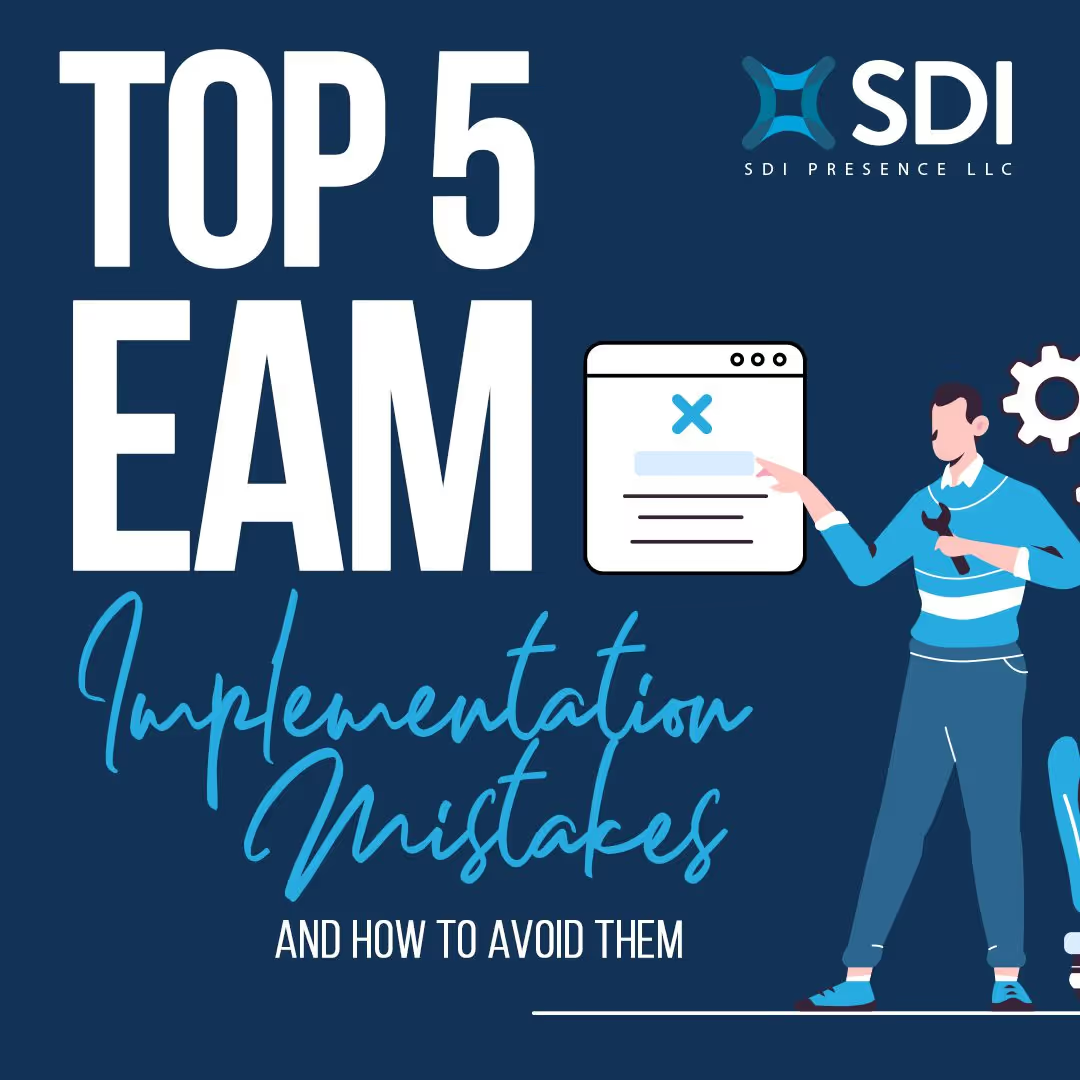

A practical guide to getting your Enterprise Asset Management investment right the first time
By Robert Jaques, Delivery Executive and EAM Subject Matter Expert
Enterprise Asset Management (EAM) systems have evolved from simple maintenance schedulers to powerful, integrated platforms that help organizations manage the full lifecycle of their assets. From IoT-enabled sensors that detect equipment failure before it happens, to AI-driven forecasting for capital planning, modern EAM systems can be a game-changer for operational efficiency and cost savings.
But with this expanded capability comes complexity. Without the right approach, EAM implementations can spiral into costly, frustrating projects that fail to deliver on their promise. Based on years of guiding clients through successful rollouts, here are the five most common EAM implementation mistakes—and the strategies we recommend to to avoid them.
1. Not Defining Clear Operations and Asset Management Strategies Before Selecting a System
The mistake: Jumping straight into vendor demos or RFPs without first defining what you want your asset management program to achieve.
Modern context: EAM systems today can manage everything from IoT-driven predictive maintenance to regulatory compliance, but not every organization needs—or is ready for—the full feature set from day one. Without a clear strategy, you risk overbuying, underutilizing, or selecting a system that can’t scale with your needs.
How to avoid it:
- Define your operations and asset management objectives first (what do you need from your assets, and therefore what are your objectives, e.g., extend asset life, reduce unplanned downtime, meet compliance requirements).
- Identify the processes, metrics, and data you’ll need to support those objectives.
- Then (and only then) choose an EAM system and implementation approach that aligns with your goals and organizational maturity.
2. Understanding Data Quality Needs (and your current state)
The mistake: Migrating decades-old, inconsistent, or incomplete data into the new system.
Modern context: Advanced EAM features—predictive maintenance, automated scheduling, performance analytics—are only as good as the data feeding them. Inaccurate location codes, outdated equipment IDs, and inconsistent naming conventions can break workflows and generate misleading reports.
How to avoid it: Build a data readiness plan before implementation. One quick test–how many different ways is “FedEx” spelled in your current accounting system? This should include:
- Standardizing asset naming and classification.
- Removing duplicates and outdated entries.
- Defining mandatory fields and validation rules.
- Establishing robust ongoing governance to keep the data clean post-go-live, even in the face of large scale construction projects.
3. Skipping Change Management and Training
The mistake: Rolling out EAM without fully communicating and preparing users for new processes and tools.
Modern context: With today’s mobile-enabled EAM systems, work often shifts from desktop to field devices, from paper to digital workflows. That change isn’t just technical—it impacts daily routines, accountability, and communication.
How to avoid it:
- Ensure management alignment with the changes to business processes.
- Incorporate change management directly into your implementation plan in a way that communicates the “why” behind the system.
- Offer role-specific training with hands-on practice in real work scenarios.
- Appoint “EAM champions” in each department to provide peer support.
- Reinforce training with management follow up, refreshers and ongoing communication.
4. Ignoring Integration Opportunities
The mistake: Using the EAM platform as a siloed application.
Modern context: Modern EAM platforms are designed to connect with ERP systems, GIS mapping, IoT devices, DCS, and SCADA systems, and financial software. Integration allows for end-to-end visibility—from asset condition monitoring to capital planning. Without it, organizations miss out on automation, insights, and efficiency gains.
How to avoid it:
- Work with Operations to identify which systems your EAM should connect to from day one.
- Work with IT to design secure, reliable data exchanges.
- Start with high-value integrations (ERP for budgeting and cost management, GIS for location-based management) and expand over time.
5. Failing to Plan for Continuous Improvement
The mistake: Treating go-live as the finish line instead of the starting line for optimization.
Modern context: EAM systems now receive regular feature updates, offer expanding AI capabilities, and respond to changing compliance requirements. Without a post-launch improvement plan, your system can become outdated in just a few years—long before your assets do.
How to avoid it:
- Create a governance committee to review EAM usage and KPIs quarterly.
- Solicit user feedback and adjust workflows accordingly.
- Stay informed about vendor updates and enhancements.
- Set aside budget and resources for optimization projects.
Final Thoughts
A successful EAM implementation is equal parts organization structure, process, people, and technology. By learning from these common pitfalls—and addressing them before they cause problems—organizations can position their EAM investment to deliver measurable, lasting value.
At SDI Presence, we’ve helped municipalities, utilities, higher education institutions, transit agencies, and airports implement EAM systems that actually deliver on their purpose. Our approach combines strategic planning, technical expertise, and change management to ensure your organization avoids costly mistakes and achieves sustainable success.
Ready to get started? Contact us today to talk about your EAM goals.

.webp)







.avif)