


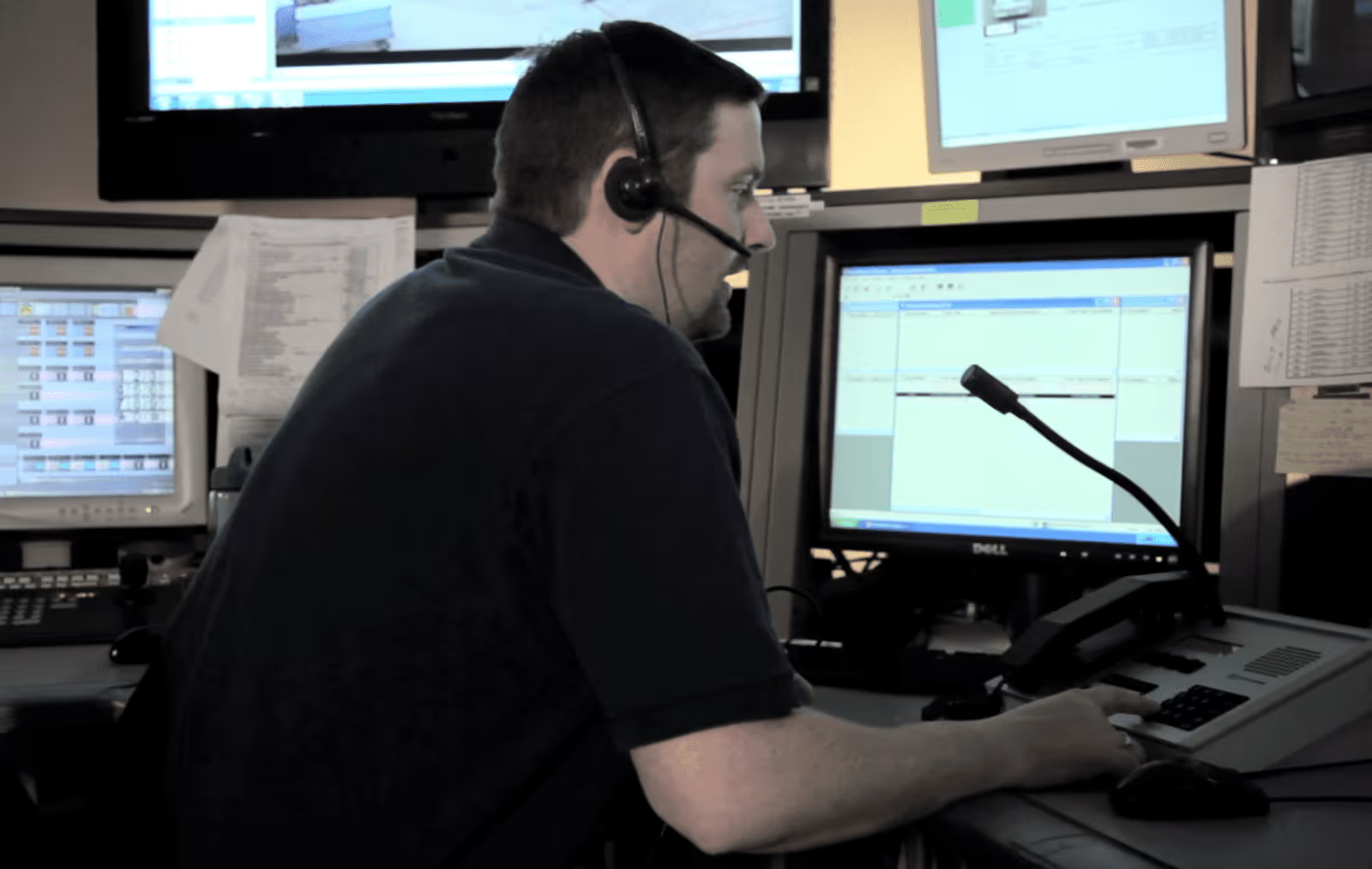

Next Generation 911 is a reality - is your organization ready? SDI's Yilmaz Halac reflects on the path to NG911 and the journey ahead:
Why the 911 System Needs to Evolve
Today, over 240 million calls are made to 911 in the U.S. each year. (A major city, such as the City of Chicago, is itself responsible for approximately 8.4 million of these calls). For more than four decades, the public has been relying on the 911 centers – also known as Public Safety Answering Points (PSAP) – to get help during emergencies and disasters. Interestingly enough, the same core 911 platforms and supporting technologies that were in place 40 years ago, are still in place today. Let’s examine the need to evolve to a more advanced 911 system that leverages the benefits of today’s technology advances.
How a 911 Call Works: From Call-Taker to First Responder
Handling a simple 911 call involves many complicated steps, simplified here: A person with an emergency initiates an emergency call to a 911 center. The information about the call for service is inputted into the Computer-Aided Dispatch (CAD) system. A dispatcher then receives the call information from the call-taker, and dispatches the call using two-way radios to those responsible and available units based on the incident. Responders receive the incident information utilizing mobile data terminals (MDTs) or mobile data computers (MDCs). The communication and data are stored for further investigation, reporting or training purposes.
Technologies Stretching Traditional CAD Systems to Their Limits
Traditional CAD systems from 40 years ago supported this workflow admirably. But over the past decade, the need to accommodate new and emerging technologies have stretched these systems to their limits:
- Geo-locating a caller’s position based on the introduction of mobile devices;
- Acceleration of VoIP adoption;
- Tracking public safety resources – such as Police/ Fire – via AVL/GPS;
- Video integration to support safe cities programs;
- Predictive analyses using big data to prevent future crimes;
- Social media monitoring to increase situational awareness;
- Incorporating texting, to share pictures and videos with 911 operators;
- Drone technologies in police/fire/ems as lead responding units; and
- Big data tools to manage the massive data that produced by these technologies.
To highlight one – if not the most important – technological impacts on the 911 system architecture: Proliferation of cellular phones have laid the foundation of sharing additional valuable and important information with the 911 call centers such as text, picture, video messaging and more accurate, reliable location information. Today in the United States over 70% of 911 calls are placed from wireless phones, and the rate is increasing every day. We often see that people are retiring their landline in their homes and businesses and relying on wireless as their primary phone device.
What Is NG911? The NENA Next Generation 911 Standard Explained
In 2000, The National Emergency Number Association (NENA) recognized the changes in technology and created a standard to accommodate these technology enhancements called “Next Generation 911” or “NG911”. At a very high level, NG911 is an IP-based network (ESInet) system that delivers voice, video, text and data "calls" to the PSAP, and eventually to the first responders. As a result, a wealth of information can flow flawlessly through the 911 system from the public to first responders and beyond. Utilizing NG911 will help us to shifts from antiquated 40-year old technology to a faster more reliable, flexible, resilient and scalable 911 systems to keep up with the changes.
To be clear, the NG911 is much more than just a new set of computers and adding some innovative functionality. NG911 focuses on sharing information with others entities, updating policies, enhancing training, utilizing best practices, adapting changes to faster and more informed responses with intelligent and actionable data. Many states are already developing plans and are creating plans to adapt NG 911 in near future, as early as 2020.
How Many PSAPs Are Upgrading to NG911?
As of December 2015, the United States had more than 6,000 primary PSAPs (where the phone rings when you call 911) and secondary PSAPs (where a 911 call may be transferred to or from). Next 5 years, we will see more and more PSAPs are being upgraded to NG911 under the umbrella of the NG911 NOW coalition.
The Growing Cost of Maintaining Legacy 911 Systems
The NG911 mandate is coupled by the undeniable fact that it is getting harder and harder to maintain, support and enhance the old 911 systems to accommodate these new technologies. In order to accommodate and implement new changes, existing 911 systems are requiring heavy customization and big financial backing from municipalities. CAD software providers are now obligated to catch up with the changing technologies in order to stay in the game. Why? Aside from achieving their organization’s business objectives, CAD product manufacturers understand that the general public’s expectations of 911 haven’t changed since inception: these systems MUST work - no matter what.
Build Your Roadmap to NG911 Adoption with SDI
Advanced system integrators with public safety operations expertise and working knowledge of complicated 911 center expertise can provide municipalities with a roadmap to adoption of NG911. As your public safety organization moves towards NG911, call on SDI Presence to keep pace with technological advances and public expectations.
About SDI Guest Blogger: Yilmaz Halac
Mr. Halac serves as the Vice President of Client Technology at SDI. Yilmaz has expertise in Public Safety Technologies and he has played significant technology management roles in major events such as the Chicago NATO Summit in 2012 as well as the 2008 Presidential election. Yilmaz has a Bachelors Degree in Computer Science and a Masters of Science in Software Engineering from DePaul University. He is currently serving as an adviser to Secured Cities, a peer-based learning symposium and the only national event providing insight into the latest in municipal public/private partnership strategies for the public and private security professional responsible for keeping their city safe, be it a downtown business district, healthcare complex, campus environment or transportation center.

.webp)



.avif)