

By Galaxia Martin, Solutions Director – Data & AI
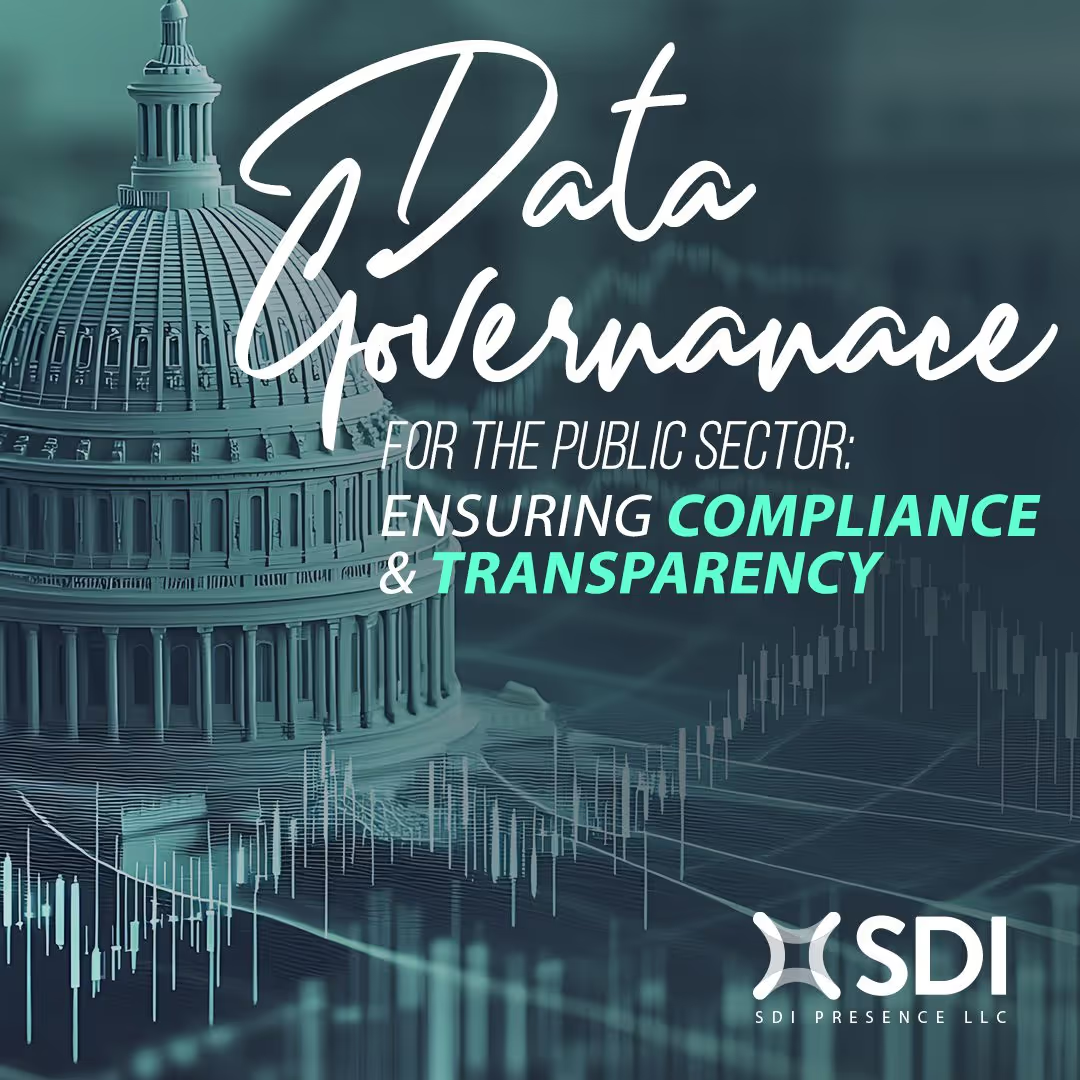
Data is no longer just a byproduct of operations—it’s a strategic asset. From ensuring equitable service delivery to meeting transparency mandates, public sector agencies are under growing pressure to manage data responsibly, securely, and intelligently. At the same time, they face increasing scrutiny from regulators, watchdogs, and the public.
As a Data Governance SME working with cities, transit authorities, and state agencies across the country, I’ve seen firsthand how the right data governance strategy can empower government leaders to not only meet compliance requirements but also make more informed, impactful decisions.
Here’s why data governance isn’t just a “nice-to-have” for the public sector—it’s essential.
Why Data Governance Matters More Than Ever for Government Agencies
Government agencies steward some of the most sensitive and mission-critical data in society—personally identifiable information (PII), public health records, utility infrastructure, permitting data, public safety information, and more. The stakes are high.
Without proper governance, that data can become fragmented, outdated, insecure, or misused—exposing agencies to legal risk, reputational damage, and public distrust.
A well-designed data governance framework helps agencies:
- Ensure regulatory compliance (FOIA, CJIS, HIPAA, and more)
- Improve data quality and accuracy
- Protect sensitive information and reduce cyber risk
- Foster data transparency and public trust
- Enable data sharing across departments without chaos
Common Challenges in Public Sector Data Governance
Many agencies want to improve how they manage data but face real constraints:
- Siloed systems and inconsistent standards - Data is often stored in legacy systems across departments, with no shared taxonomy or metadata.
- Resource constraints - Governance initiatives can stall without clear ownership or staff capacity.
- Lack of executive buy-in - Governance may be viewed as an IT problem, rather than an enterprise-wide priority.
- Difficulty balancing transparency and security - Agencies must meet open data requirements while protecting sensitive information.
SDI’s Approach to Public Sector Data Governance
At SDI Presence, we help agencies build practical, scalable governance programs that align with their mission, risk posture, and capacity. Our proven approach includes:
- Governance Framework Development - We start by defining a framework tailored to your environment—policies, roles, responsibilities, stewardship models, and escalation paths. We help agencies move from “who owns what” to “who is accountable for what.”
- Metadata & Data Cataloging - Visibility is step one. We use tools and processes to inventory data assets, define metadata standards, and ensure consistent classification—paving the way for open data, analytics, and AI readiness.
- Data Quality & Lifecycle Management - From onboarding to archival processes, we ensure data is accurate, validated, and governed throughout its entire lifecycle. This includes establishing clear data classification standards to categorize data based on sensitivity and importance, which helps inform appropriate handling, security, and access controls. Additionally, we define golden records to ensure data consistency and accuracy and align data retention policies with regulatory requirements to maintain compliance and data integrity.
- Security, Privacy & Access Controls - We embed privacy by design. That means establishing role-based access, audit trails, and risk classification to protect against breaches and ensure only the right people access the right data.
- Change Management & Training - Governance only works when people understand and support it. We develop training programs, governance charters, and executive reporting mechanisms that ensure lasting adoption.
Real Results: Data Classification Across 17 City Departments
For one major U.S. city, SDI designed a governance model that enabled consistent data classification across 17 departments. This work supported open data publishing, enhanced compliance with public records requests, and helped lay the groundwork for predictive analytics.
Turn Data Governance into a Public Sector Advantage
Public sector agencies are expected to do more with data—while maintaining transparency, security, and compliance. That’s a heavy lift without a foundation of strong governance.
The good news? You don’t have to start from scratch or boil the ocean. With the right guidance and a clear roadmap, governance can be not just a compliance requirement—but a powerful enabler of better service, smarter operations, and greater public trust.
Contact SDI to make your data work for you—and for the people you serve.


.webp)